HiFiBooks.com

HiFiBooks.com

Robert Harley's Guides to High-End Audio and Home Theater

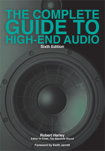
The Complete Guide to High-End Audio

The Complete Guide to High-End Audio

Preface to the Fourth Edition

This new fourth edition of The Complete Guide to High-End Audio represents the most extensive overhaul of the book since its introduction in 1994. The reason is simple: today's music listener is faced with an unprecedented array of new technologies for acquiring, storing, and accessing music. As recently as 2004 (the book's last update), CD was the dominant medium, SACD and DVD-Audio were battling to be the CD's high- resolution successor, downloadable music was severely compromised in sound quality and thus of little interest to the audiophile, and only a few hardy souls dared to use a PC as a music server.

Just six years later, everything is different. Downloadable music is no longer synonymous with horribly compressed MP3 sound quality—it's the serious music lover's path to spectacular-sounding high-resolution digital audio. The format war between SACD and DVD-A was rendered moot by the death of physical media. Although SACD is still a great format with many years of life left, the Internet allows us to transcend physical formats and download high-resolution files, independent of the dictates of the mass market or the need to standardize on a disc format. Linn Products, the company that revolutionized high-performance audio in 1972 with its LP12 turntable, ceased production of CD players in early 2010. Its customers had moved on to accessing music via the Internet. Further evidence of this trend comes from the president of Polygram records, who stated that 90% of all CDs sold are played just once—to be ripped to a computer hard drive. We are in an exciting new age.

But it's not just high-res digital, music servers, downloadable music, and hard- drive storage that have dramatically changed the audiophile landscape. Technology advances have greatly improved the performance of the traditional cone-based dynamic loudspeaker. Switching amplifiers, with their cool operation, compact size, and high output power, are beginning to be taken seriously. That venerable old format, the vinyl record, is seeing a remarkable resurgence in popularity (LP sales doubled in 2009 over 2008). Today's turntables, tonearms, and cartridges extract even more musical information from the LP's grooves. And CD playback has improved immeasurably, largely the result of inventive new digital filters. The establishment of Blu-ray Disc as a mass-market format has wonderful implications for the music lover. The format can contain not only high-definition video, but also up to eight channels of high-resolution digital audio with perfect bit-for-bit accuracy to the source. Concert performances on Blu-ray are nothing short of spectacular. Finally, although the laws of physics haven't been repealed, this fourth edition incorporates new techniques and products for optimizing your listening room and tweaking your system for the best possible sound.

As has been the case with previous editions, each chapter progresses from the most basic information to deeper technical discussions. When you've reached your own comfortable depth, simply skip to the beginning of the next chapter where the material becomes easier. This book is meant to be used as a reference rather than read linearly from start to finish. Keep in mind that you don't need to understand the technical aspects of audio to enjoy music in your home. I've presented the technical content for those readers interested n knowing how audio works, and to make this book truly The Complete Guide to High-End Audio.

Back to the book overview